

 Post by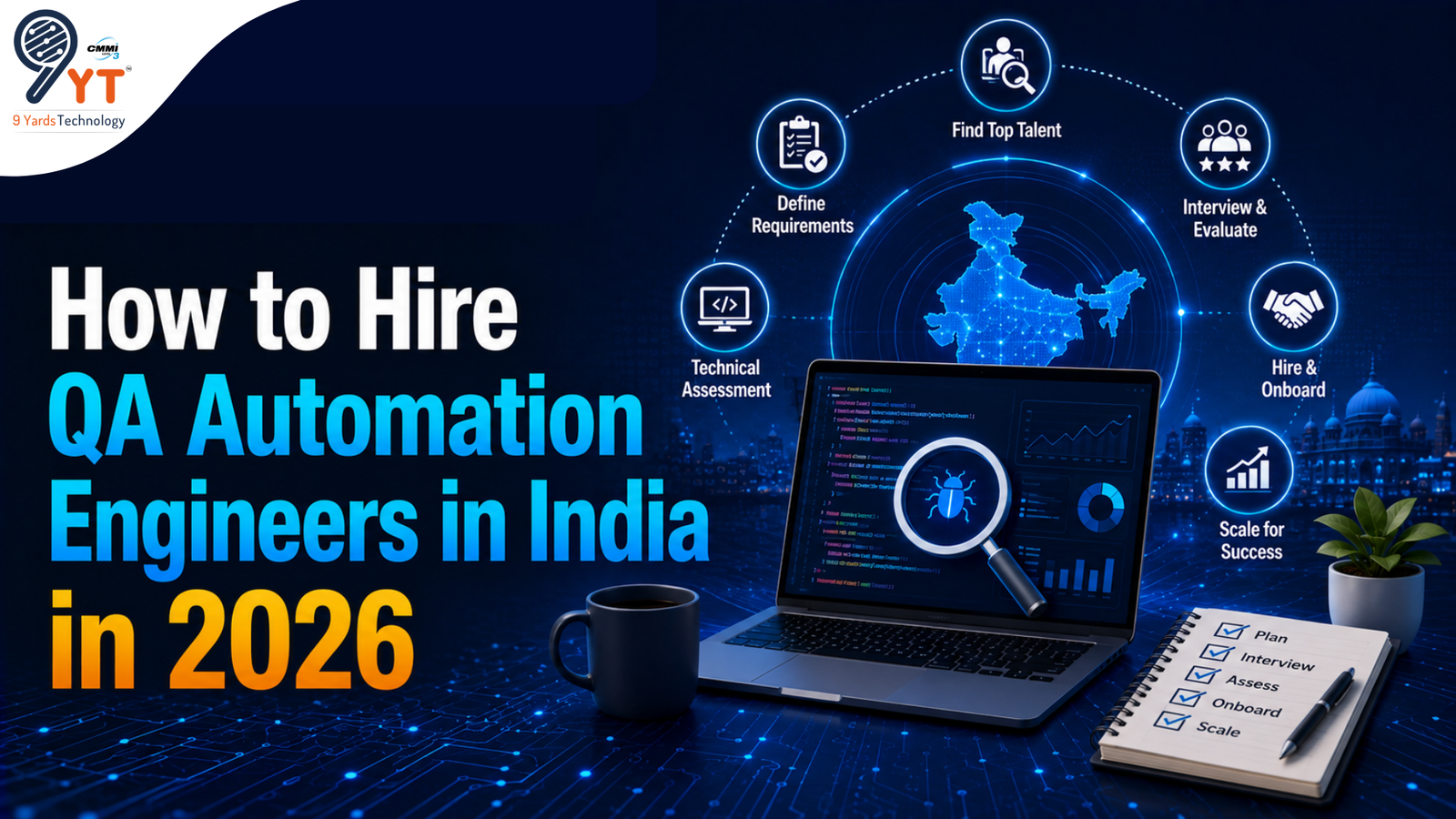
Most companies that try to hire QA automation engineers in India make the same mistake: they screen for tool familiarity instead of test thinking. QA automation engineer salaries vary considerably by city. Bangalore and Pune command 15–20% premiums over Hyderabad and Chennai for senior roles, but salary is the last thing to optimize. Get the vetting wrong at the skills layer, and no cost saving covers the rework bill.
This article is for engineering leaders who have open QA requisitions, have probably already wasted two or three weeks on unqualified CVs from generic agencies, and want a clear framework for what good looks like, what it costs, and how fast a properly run process can move.
What Separates a QA Automation Engineer from a Manual Tester with a Script
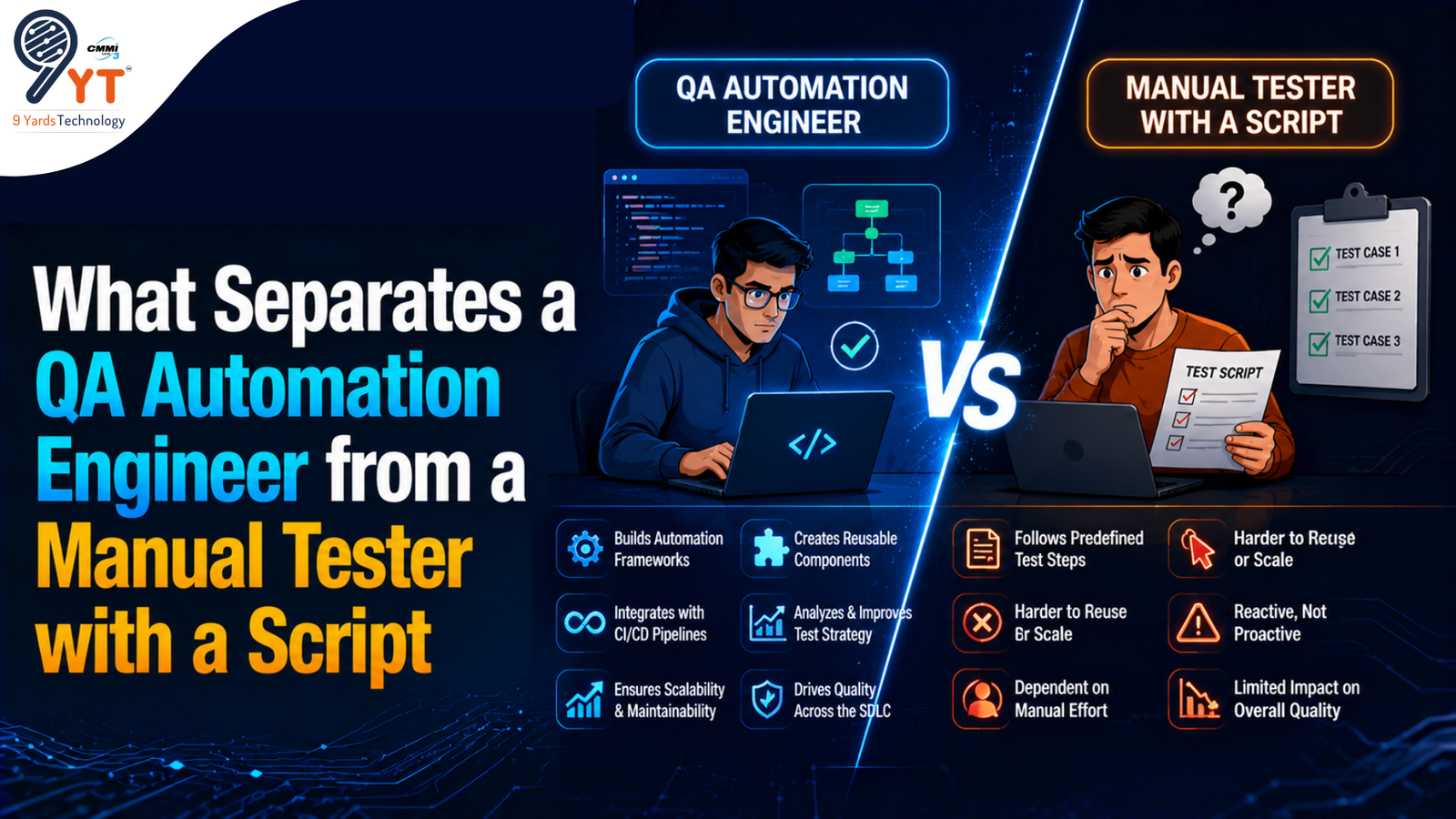
The label “QA automation engineer” covers an enormous range of actual capability. At the low end, it means someone who has recorded Selenium IDE scripts and called it automation. At the high end, it means someone who designs a test architecture from scratch, integrates it into a CI/CD pipeline, writes maintainable page-object models, and owns the quality signal for an entire release cycle.
The distinction matters because the market for the second profile is genuinely competitive even in India. QA automation specialists with strong CI/CD integration experience are among the harder-to-find profiles in the market, the label ‘QA automation engineer’ covers a wide range of actual capability, and the profile who can design a framework from scratch rather than record scripts is genuinely scarce.
The practical screening question is not “do you know Selenium” but “walk me through the last test framework you built from scratch.” Engineers who have only maintained existing frameworks cannot do this. Engineers who have designed one will give you fifteen minutes of detail without prompting. Framework ownership is the single clearest proxy for senior QA automation capability.
Vetting Criteria: Selenium, Playwright, Cypress Skills in India
Selenium, Playwright, and Cypress skills in India are widely distributed across the talent market, but depth varies sharply by generation of the engineer. Selenium remains the dominant framework by volume. Since 2022, Playwright adoption has grown quickly, particularly among engineers working on SaaS products and those with exposure to TypeScript-first codebases. Cypress is common in frontend-heavy teams.
When evaluating a candidate, the framework on their CV matters less than what they can do across frameworks. A strong QA automation engineer moves between tools based on context. A weak one defends their preferred tool because switching would expose the gap. Evaluate candidates using four specific criteria at the technical screening stage:
Test architecture design. Can the candidate design a layered framework, with page objects, utility layer, and reporting layer, rather than writing flat test scripts?
CI/CD integration. Have they wired test suites into Jenkins, GitHub Actions, or GitLab CI? Ask for a specific pipeline they built or modified.
Cross-browser and API test coverage. UI-only test suites are a red flag. Senior engineers own API-level tests and understand where UI automation is the wrong tool.
Flakiness management. Ask how they handle test flakiness. Any engineer who says “we rerun the test” rather than diagnosing the root cause is not operating at a senior level. One structured technical assessment, not a take-home exercise, is the most reliable filter. Take-homes are easy to delegate.
QA Automation Engineer Hourly Rate India: What the Market Actually Costs
QA automation engineer hourly rate India is frequently the first search a procurement team runs, and it is also the most misleading framing for the actual buying decision. Hourly rates on freelance platforms range from $12 to $35 per hour depending on the platform, the individual’s experience, and whether the rate includes management overhead. Those numbers do not include replacement cost, ramp time, or the administrative overhead of managing a contractor relationship across time zones.
The right cost unit for a staff augmentation engagement is annual, not hourly. Based on 9Yards Technology‘s current deployment data, a senior QA automation engineer deployed from India costs between $28,000 and $40,000 annually. The equivalent US hire runs $120,000 to $150,000, an annual saving of $80,000 to $122,000 per senior engineer. For a team of five senior QA automation engineers, that saving compounds to $400,000 to $550,000 annually before accounting for benefits, office overhead, or recruiting costs.
| Role | US Local (Annual) | 9YT India (Annual) | Annual Saving |
|---|---|---|---|
| Senior QA Automation Engineer | $120,000–$150,000 | $28,000–$40,000 | $80,000–$122,000 |
| QA Lead / Test Architect | $135,000–$165,000 | $32,000–$46,000 | $89,000–$133,000 |
| QA Automation + CI/CD Specialist | $130,000–$160,000 | $30,000–$44,000 | $86,000–$130,000 |
These are annual figures. Do not convert them to an hourly rate without a confirmed utilization and margin basis, which will vary by engagement model.
QA Outsourcing Hidden Costs India: What Generic Agencies Don’t Tell You
QA outsourcing hidden costs in India cluster in three places that most agency contracts do not surface upfront.
Ramp and context-transfer time. A new QA engineer, even a skilled one, needs two to four weeks to understand a new codebase well enough to write meaningful tests. During that window, output is low. Generic agencies count this as billable time against your contract. A structured staff augmentation engagement with ongoing performance monitoring catches ramp stalls early and intervenes.
Replacement friction. When an agency’s engineer doesn’t work out, most contracts have a 30 to 60-day replacement clause, which effectively means you absorb a month or more of lost productivity plus a new ramp cycle. The 9Yards Technology replacement SLA is 7 days, a concrete financial commitment rather than a reassurance.
Framework debt. An engineer hired on a short-term outsourcing contract has no incentive to build maintainable tests. They optimize for coverage metrics, not for the engineer who has to maintain the suite after they leave. This cost shows up six months after the engagement ends, not in the original invoice. Staff augmentation, by embedding the engineer into your team and standards, changes that incentive. The NASSCOM India Tech Industry Report documents the broader pattern: Indian IT services quality varies far more by engagement model than by geography or vendor size.
How the Deployment Process Actually Works
A structured process to hire QA automation engineers in India through IT staff augmentation runs on a defined timeline.
9Yards Technology’s Talent Deployment Matrix for QA automation roles:
- Requirement received. Client submits the role specification, including framework preferences, seniority level, and time-zone requirements.
- Talent mapping. Internal matching against the pre-vetted bench. QA automation is one of the most in-demand profiles on 9Yards Technology’s bench, so shortlisting is typically same-day.
- Screening. Initial qualification against the technical criteria above.
- Technical assessment. Structured evaluation covers framework design, CI/CD integration, and a flakiness scenario.
- Client interview. Client meets the shortlisted candidate to assess culture fit and communication style.
- Deployment. Engineer joins the client team within 2 to 3 weeks of the initial requirement.
- Performance monitoring. Ongoing tracking against agreed metrics. The 7-day replacement SLA activates if any issue is escalated.
Profiles reach the client in 48 to 72 hours. Full deployment completes in 2 to 3 weeks. Industry-reported averages for sourcing a QA automation engineer through traditional hiring sit at roughly 90 days, meaning the time recovered per hire is approximately 69 days of productive engineering capacity. Industry analysis of offshore engagement models consistently identifies QA automation, AI/ML, and cloud security as the hardest engineering specialisations to fill through traditional hiring channels.
Read More: Staff Augmentation Onboarding Process: Week 1 Productivity
9Yards Technology Proof Point: Talkdesk needed QA automation engineers as part of a broader India engineering hub build. 9Yards Technology deployed 45+ engineers across Engineering, QA, Security, ERP, and Business Analysis functions. The India hub was established in 3 months, with hiring 80% faster than Talkdesk’s previous process and talent costs reduced by 50% through offshore delivery. The partnership remains active, with QA treated as a core function from the start rather than as a support function.
Read More: Product Engineering Staff Augmentation: How SHL Scaled 60 Engineers in 2 Months
Comparing Hiring Paths: Direct Sourcing vs. Staff Augmentation
For a company that has never hired QA automation engineers in India, the choice is typically between direct sourcing through local job boards like Naukri and LinkedIn India, a generic staffing agency, or a specialised IT staff augmentation partner.
| Evaluation Criterion | Direct Sourcing | Generic Agency | 9YT Staff Augmentation |
|---|---|---|---|
| Time to first profile | 2–4 weeks | 1–2 weeks | 48–72 hours |
| Pre-vetting depth | None | CV review only | Technical assessment included |
| Replacement SLA | Not applicable | 30–60 days typical | 7 days |
| Framework design screening | Buyer-managed | Variable | Structured, consistent |
| CI/CD integration check | Buyer-managed | Rare | Standard |
| Retention rate | Unknown | Industry avg ~70% | 95% |
| Time-zone coverage for NA | Buyer-managed | Variable | Flexible, explicit |
Direct sourcing is viable if you have a dedicated India-based recruiter with QA technical screening capability and time. Most teams that try it underestimate how quickly senior QA automation profiles move off the market and end up extending timelines by 6 to 8 weeks. LinkedIn’s 2024 Global Talent Trends report shows QA automation as a top-10 fastest-filling specialist role in India’s technology sector, which means the best candidates are off the market in days, not weeks. Generic agencies fill seats. A structured staff augmentation partner vets for framework ownership, CI/CD depth, and maintainability, then backs the hire with a published SLA.
The core argument of this article is simple: the difference between a good and a bad QA automation hire in India is the depth of vetting at the framework architecture and CI/CD integration layer, and the quality of the ongoing accountability structure after the hire is made. Cost without a quality filter produces a cheaper version of the same problem.
Need pre-vetted engineers in 48–72 hours? Talk to a 9Yards Technology specialist with no obligation and no generic shortlist.
Frequently Asked Questions
What is the QA automation engineer salary by city in India for 2026?
Senior QA automation engineers in Bangalore and Pune typically command 15–20% more than equivalents in Hyderabad and Chennai, reflecting higher local demand and cost of living. On an annual basis, senior QA automation roles across India’s top tech cities cost $28,000 to $40,000 through a staff augmentation engagement, compared to $120,000 to $150,000 for equivalent US hires. City-level variation matters less than seniority and framework depth when benchmarking.
What are the hidden costs of QA outsourcing in India that agencies don’t disclose?
Three costs surface after the contract is signed: ramp time, which runs two to four weeks even for skilled engineers and is typically billed; replacement friction, where most agency contracts allow 30 to 60 days for a swap versus a 7-day SLA from a structured staff augmentation partner; and framework debt, where short-term contractors optimise for coverage metrics rather than maintainable test suites. That last cost shows up six months after the engagement ends, not on the original invoice.
Which Selenium, Playwright, or Cypress skills should I require for India-based QA automation engineers?
Framework preference matters less than framework ownership. Prioritise candidates who can design a layered test architecture from scratch, integrate suites into Jenkins or GitHub Actions, own API-level coverage alongside UI tests, and diagnose test flakiness at the root cause rather than rerunning failing tests. Engineers who have only maintained existing frameworks will struggle when your test suite needs to scale or when the underlying application changes significantly.
How long does it take to hire QA automation engineers in India through staff augmentation?
Through a structured IT staff augmentation engagement, pre-vetted QA automation profiles arrive in 48 to 72 hours. Full deployment, including technical assessment, client interview, and onboarding, completes in 2 to 3 weeks. Traditional hiring through local job boards or generic agencies typically runs 60 to 90 days for senior QA automation roles in India’s major tech cities, reflecting how fast qualified candidates move off the market.